



19th-Century Antique Italian Celestial Globe on Turned Wood Floor Stand
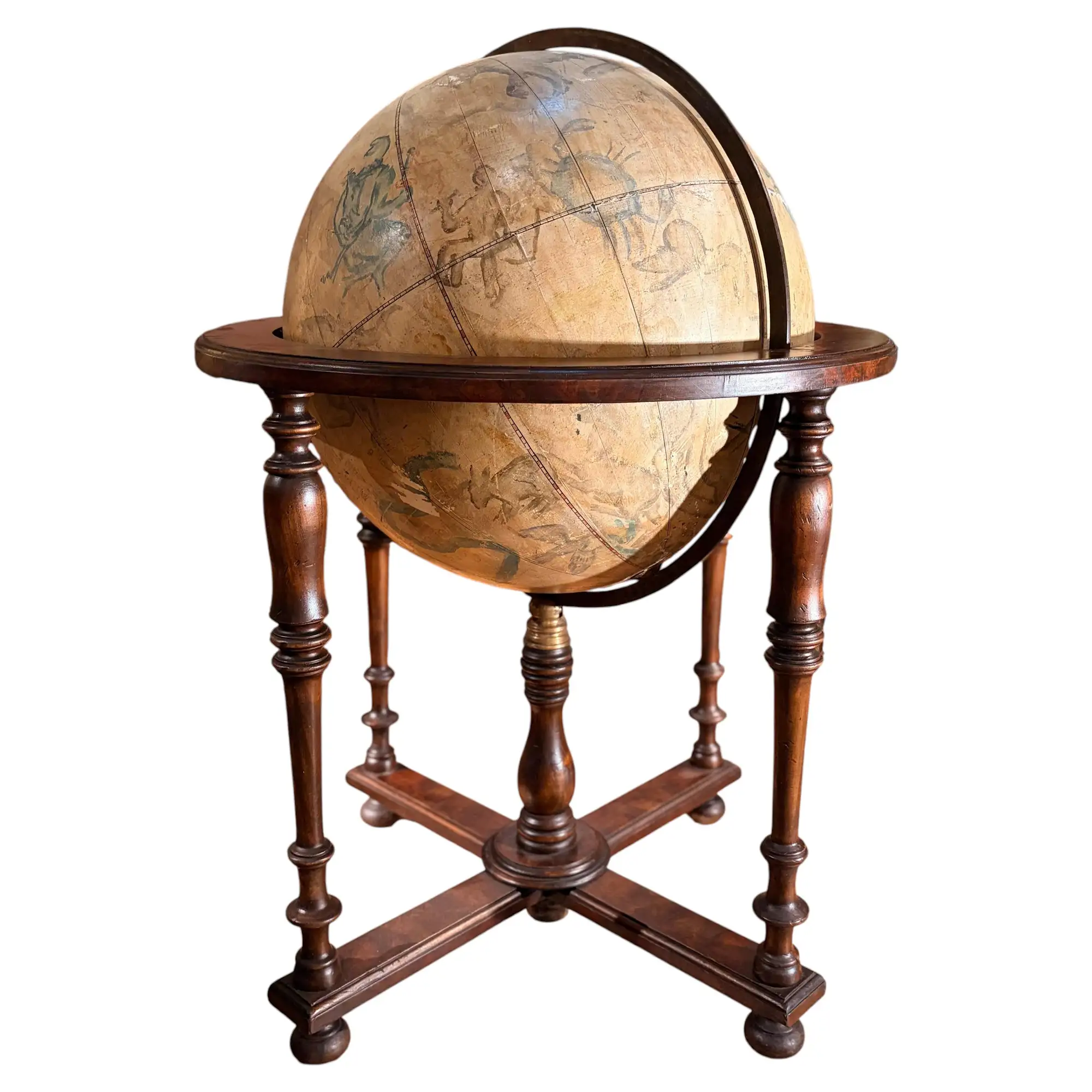
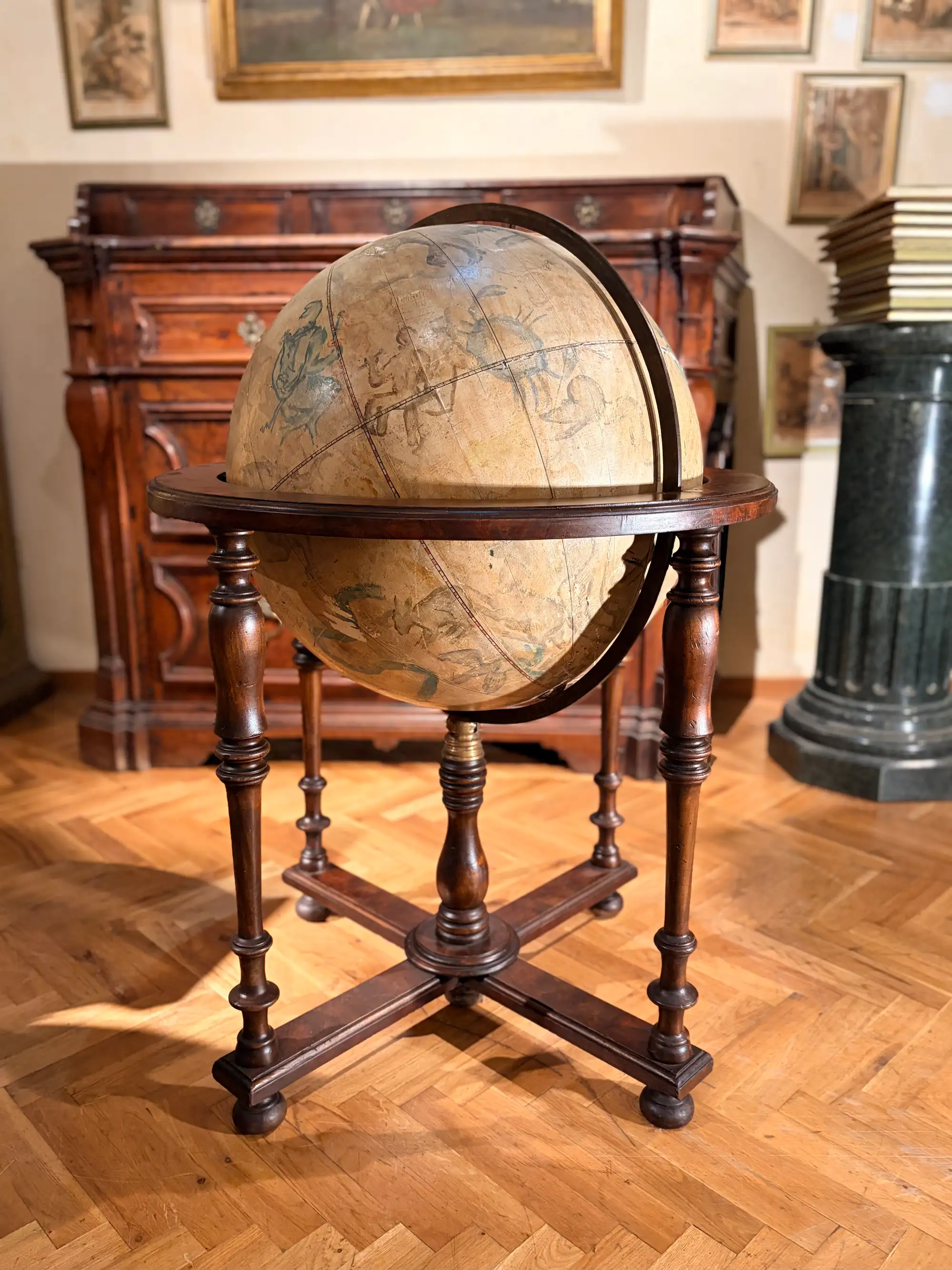
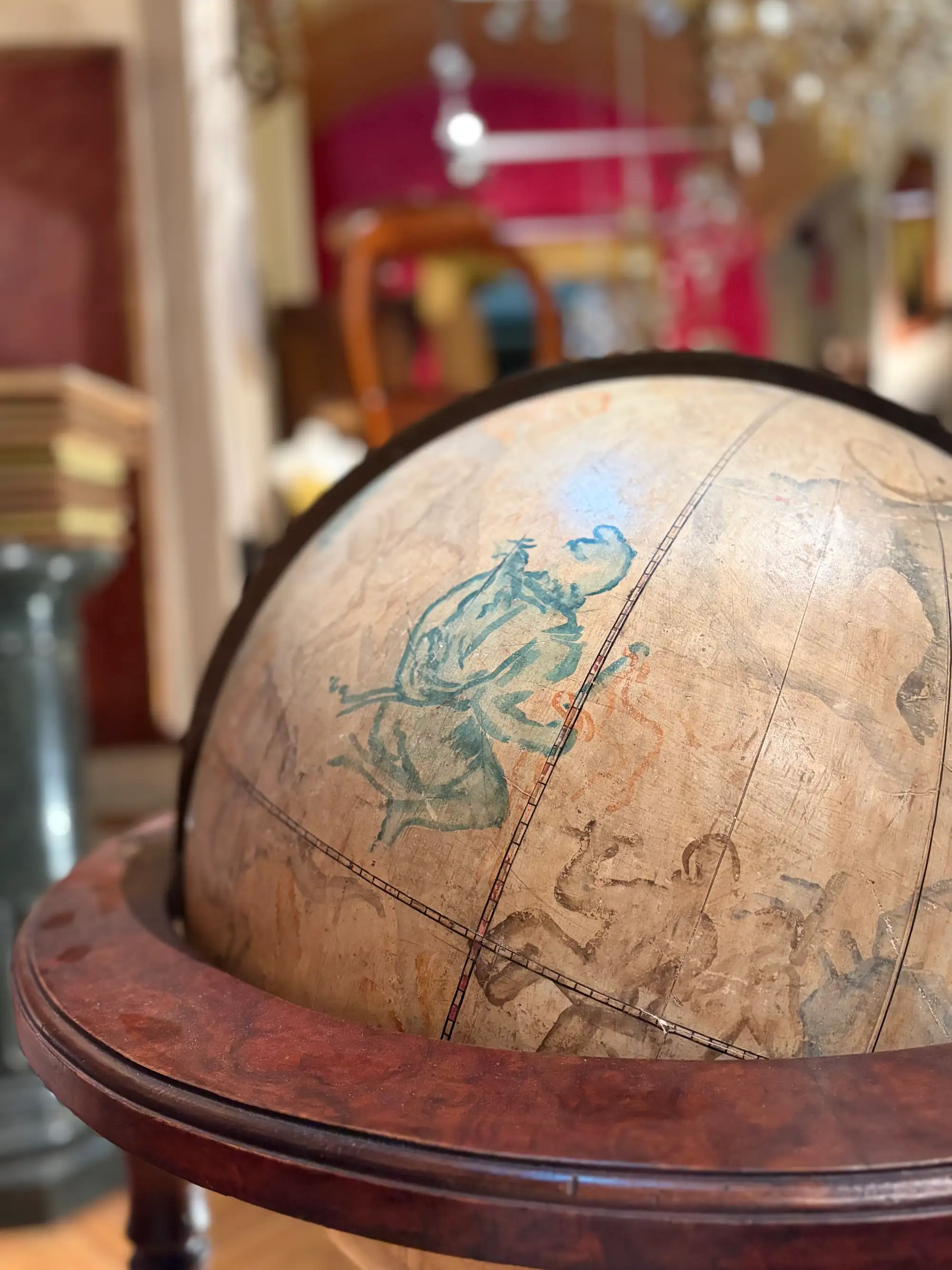
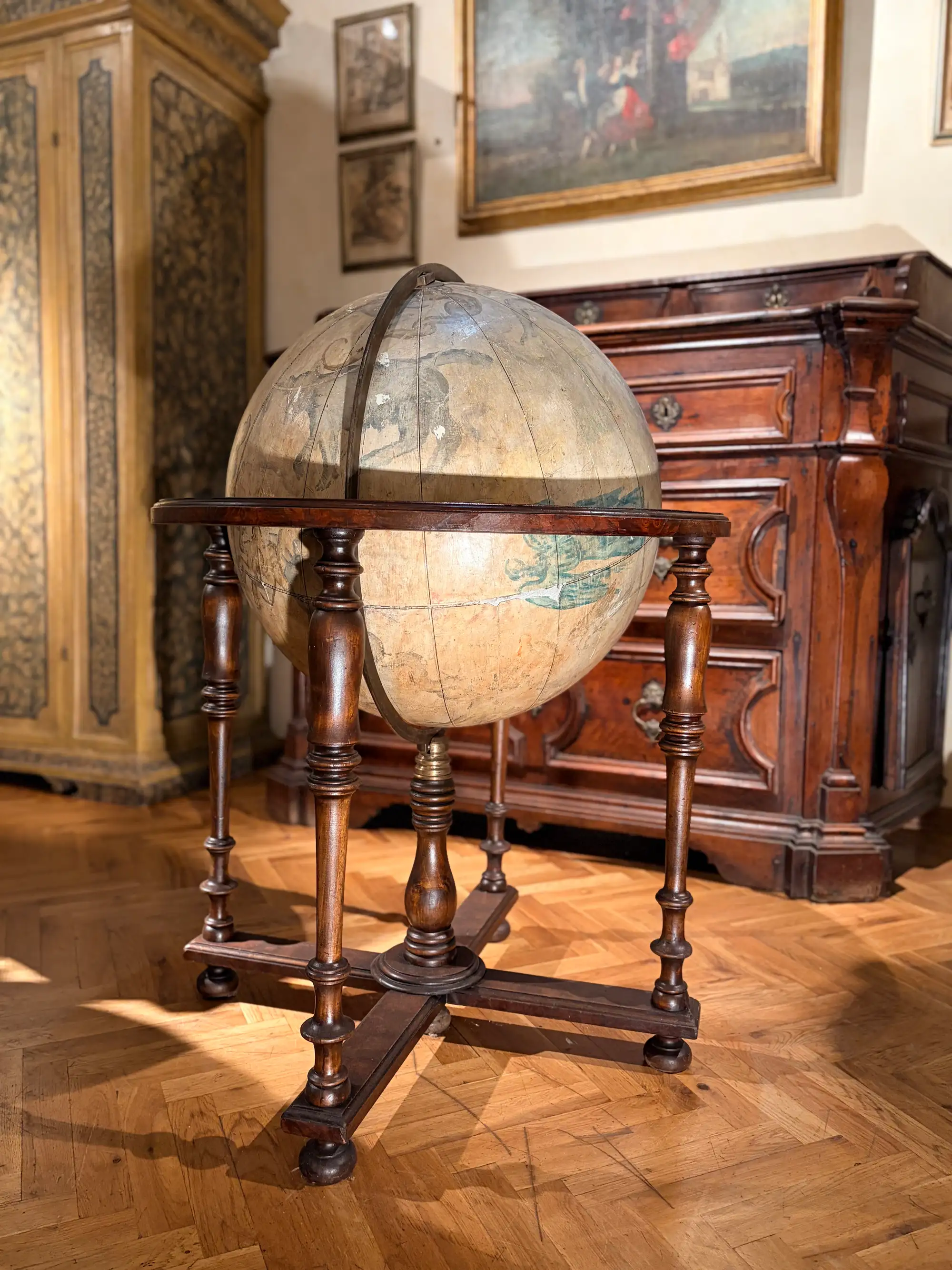
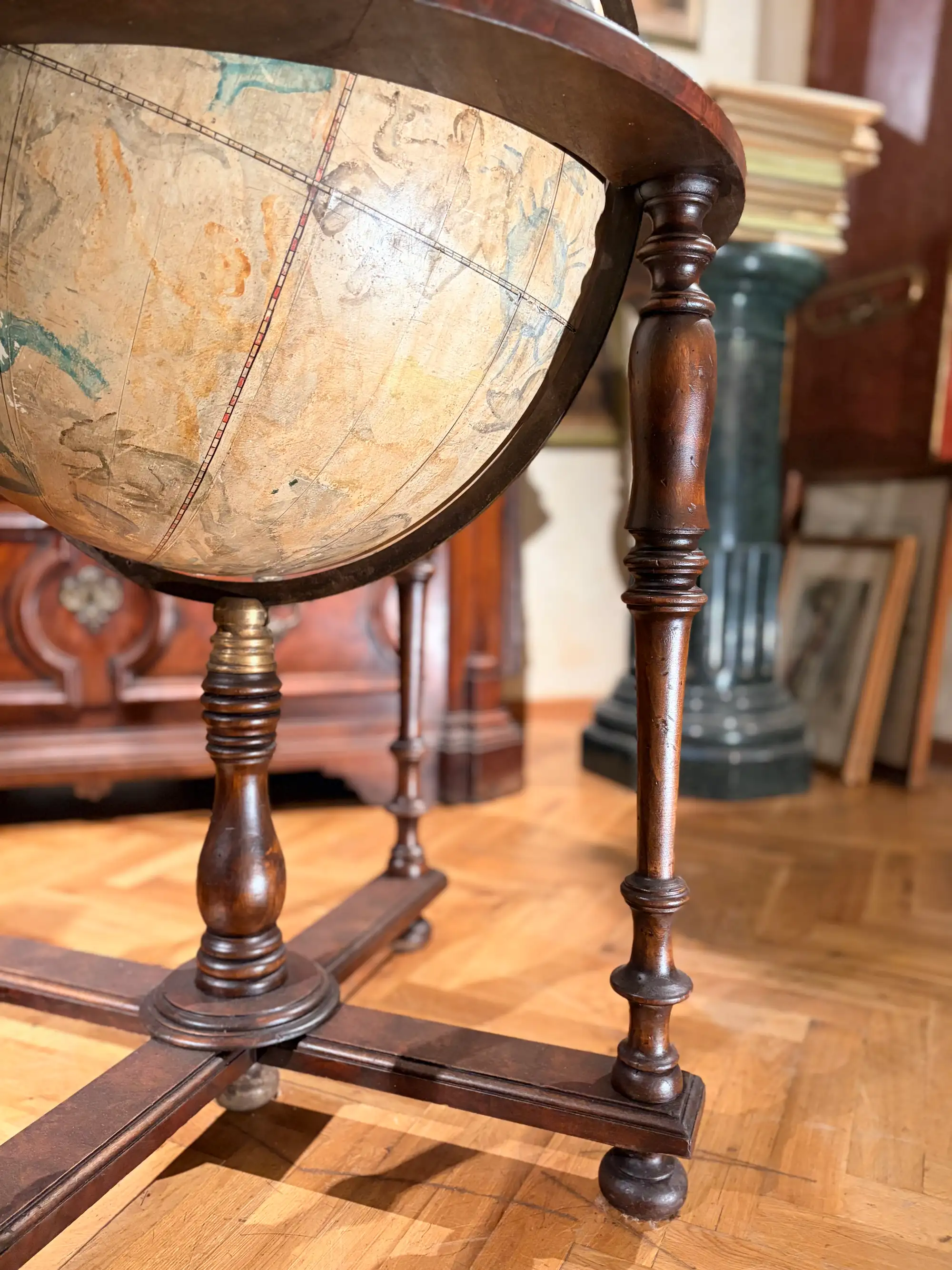
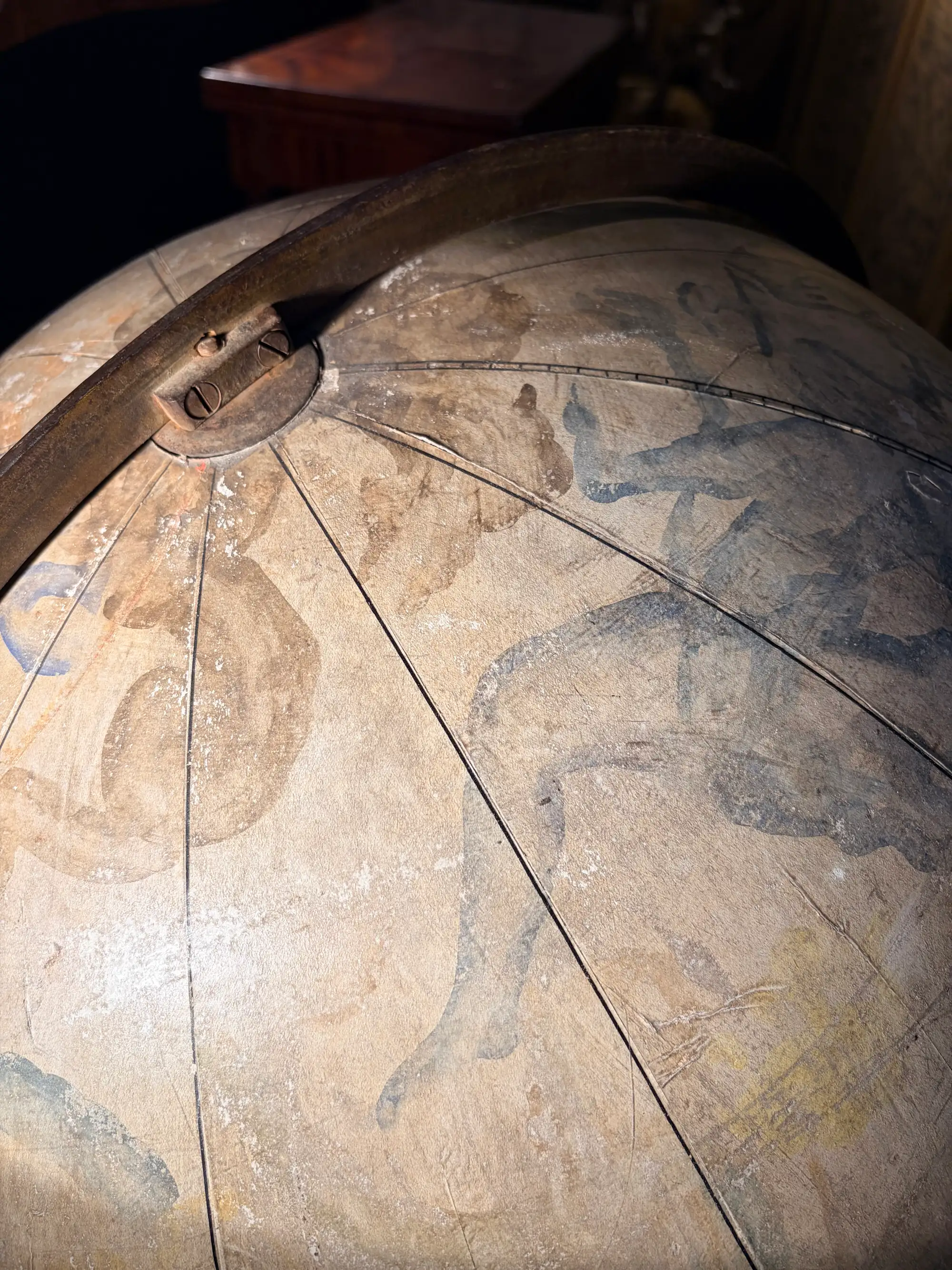
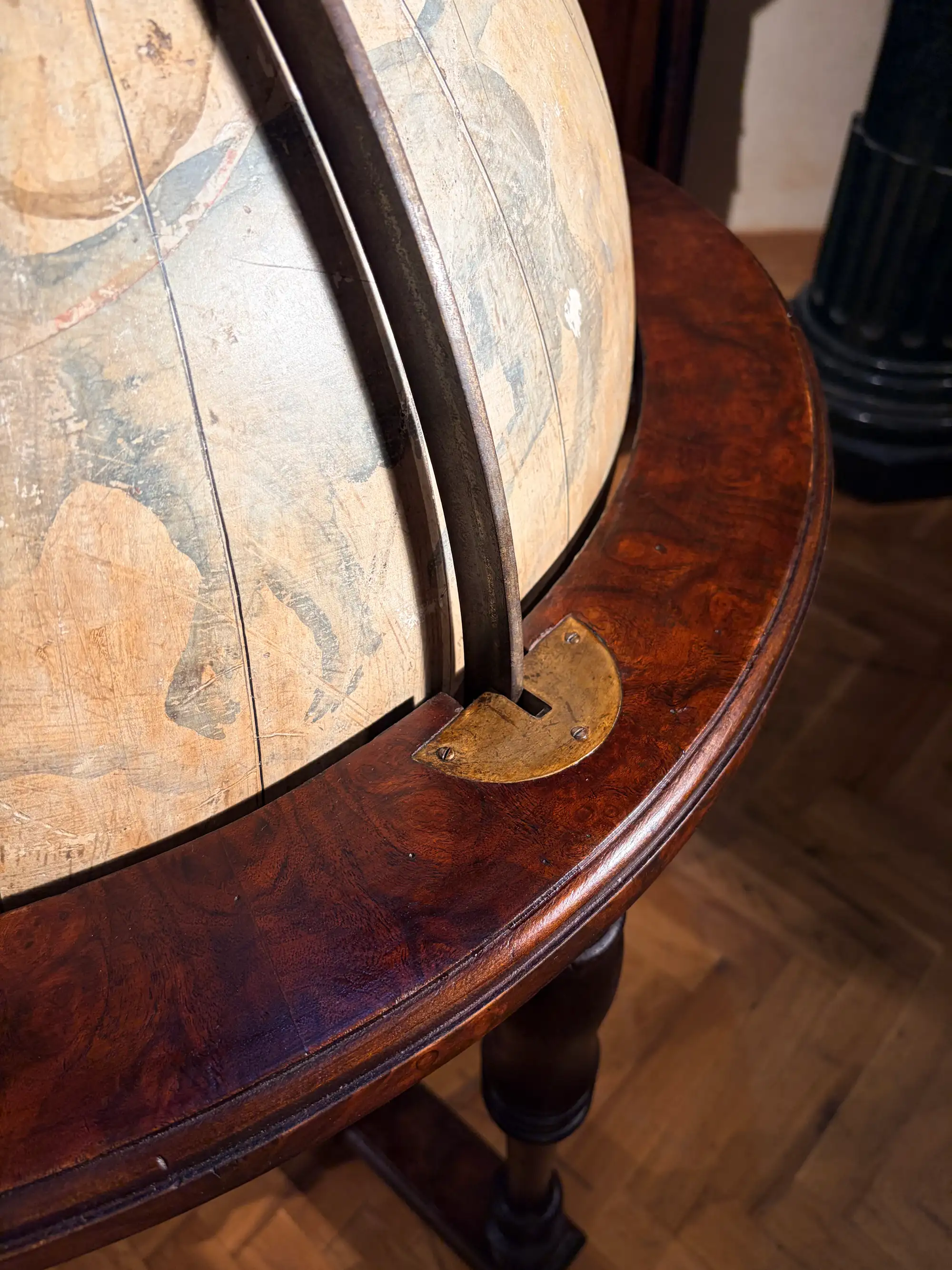
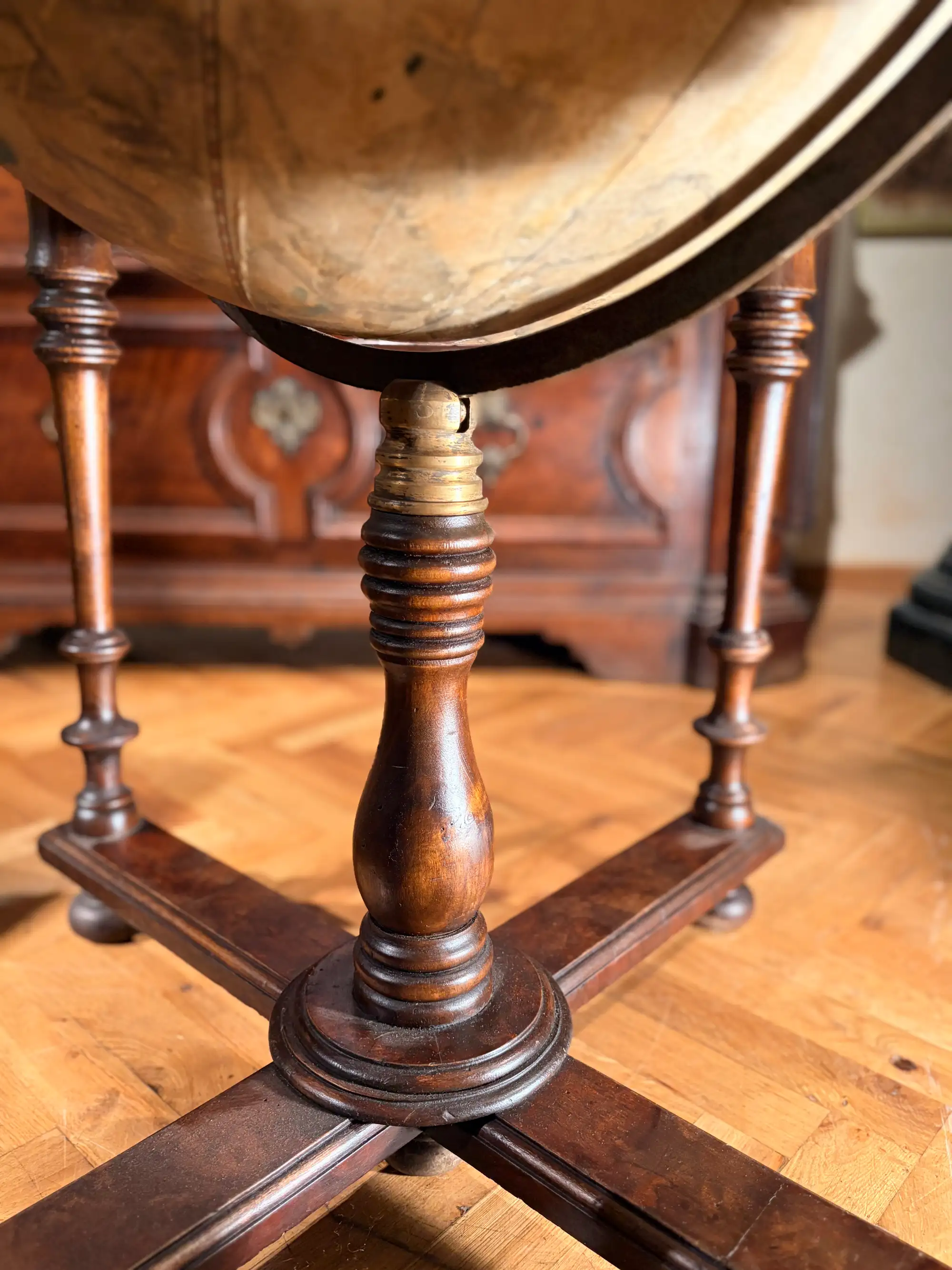
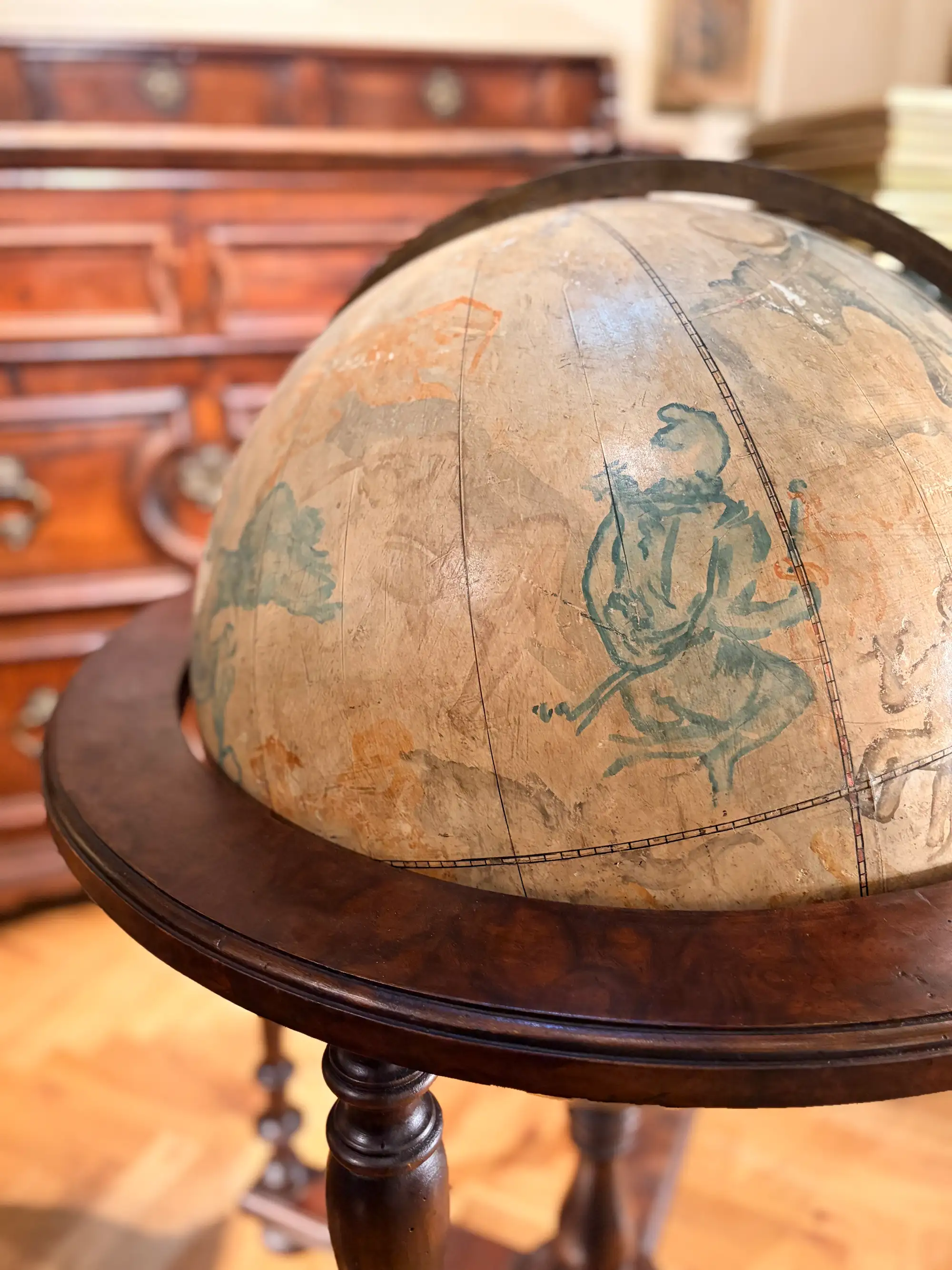
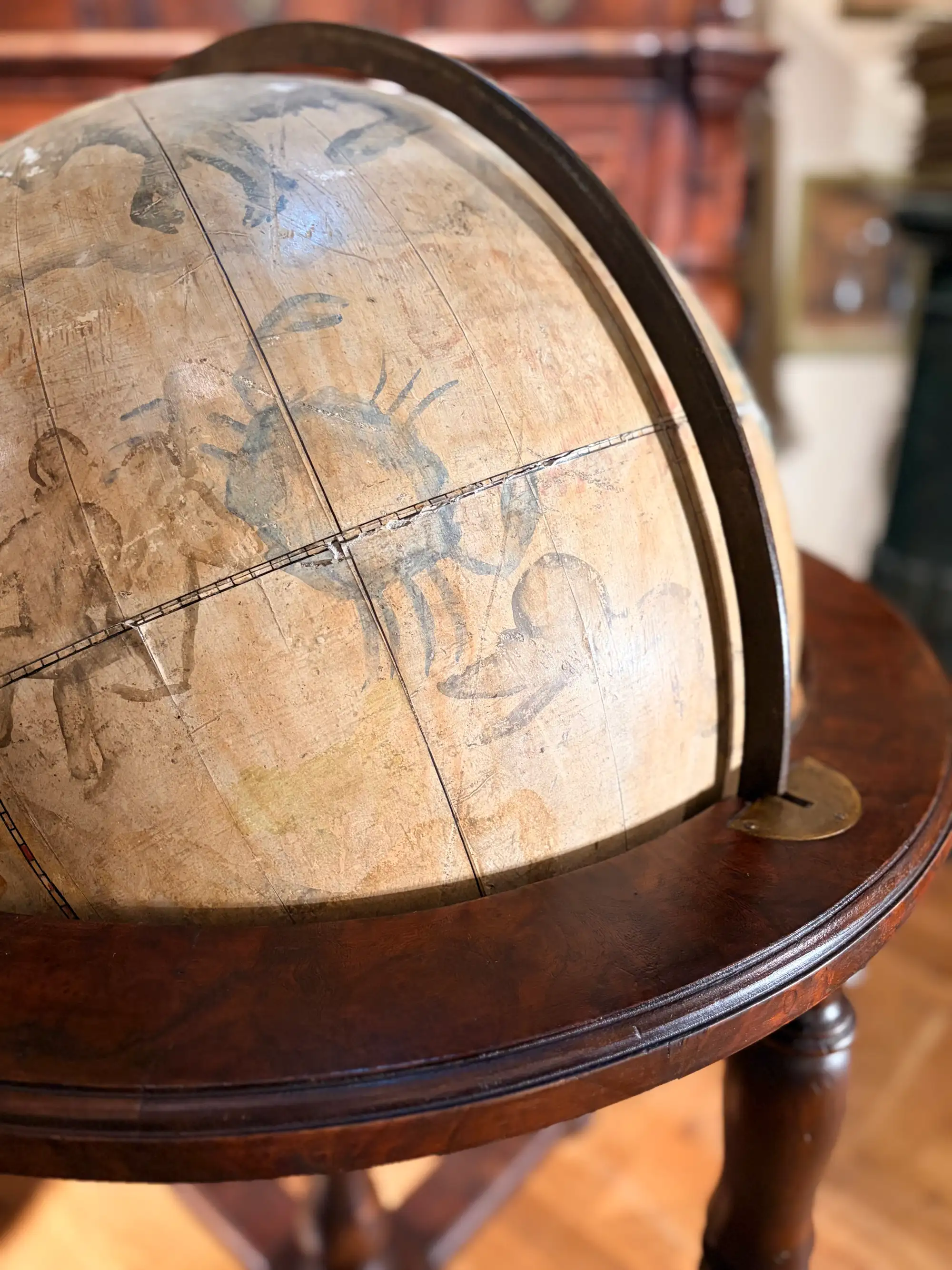
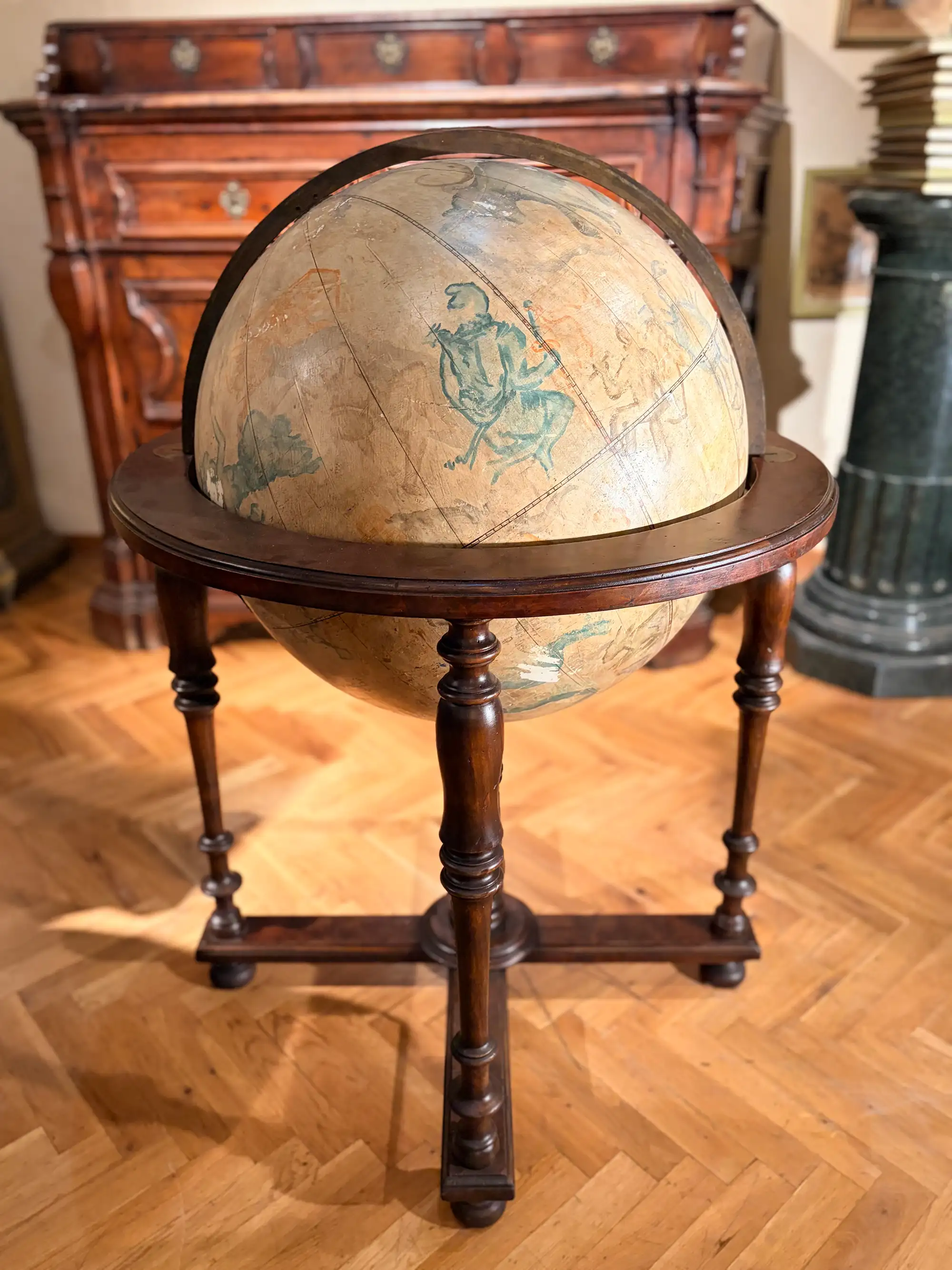
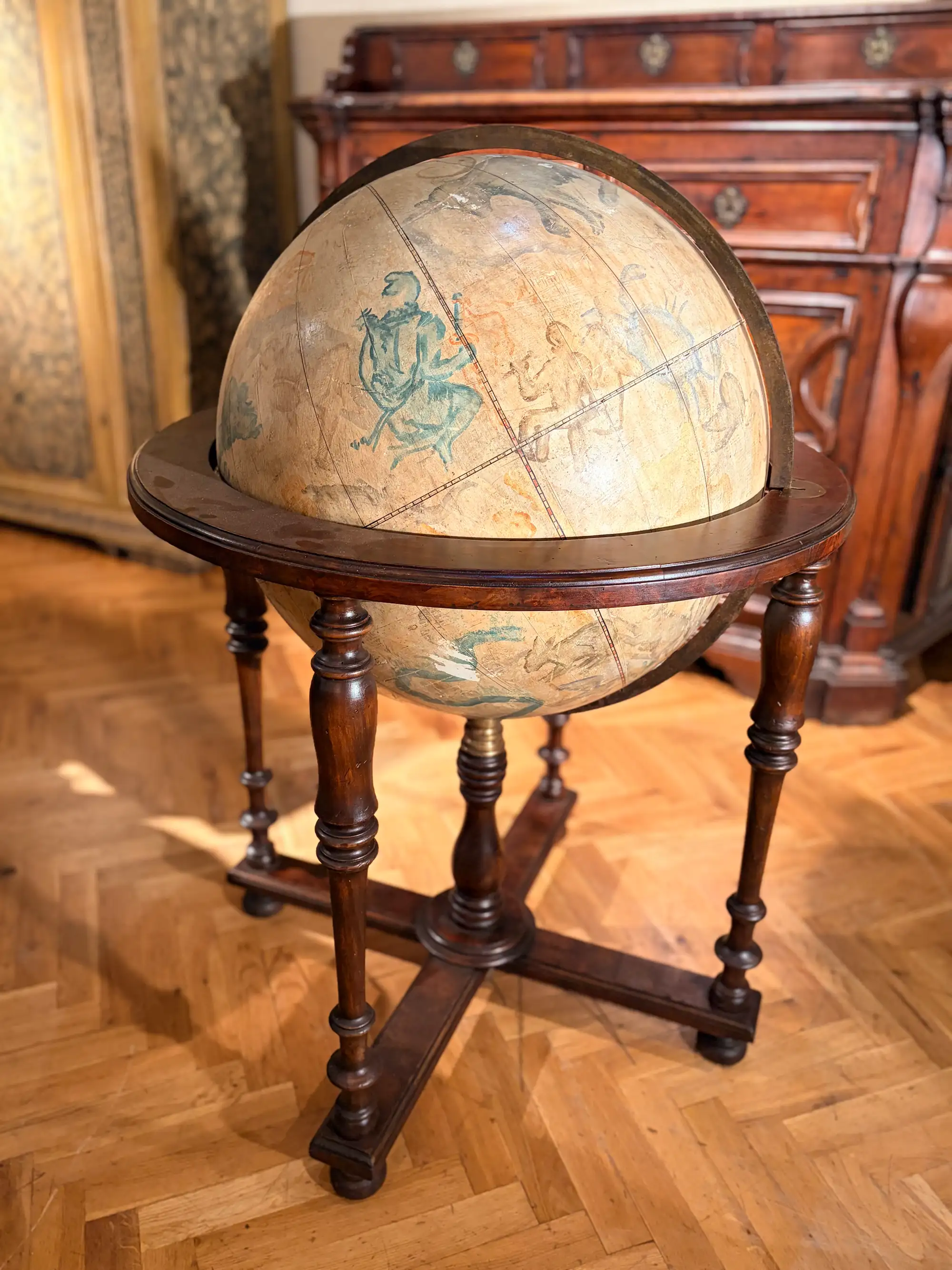
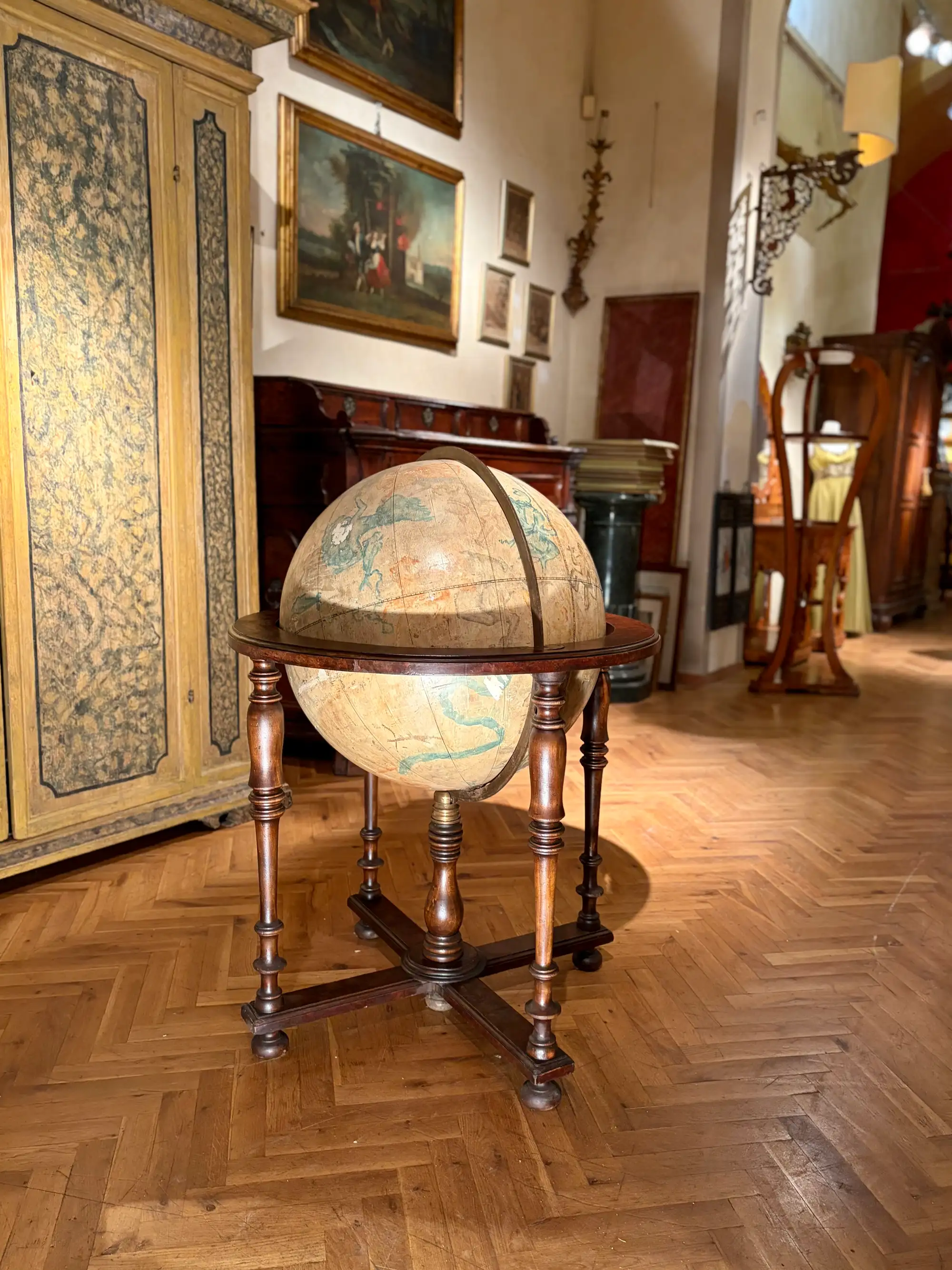
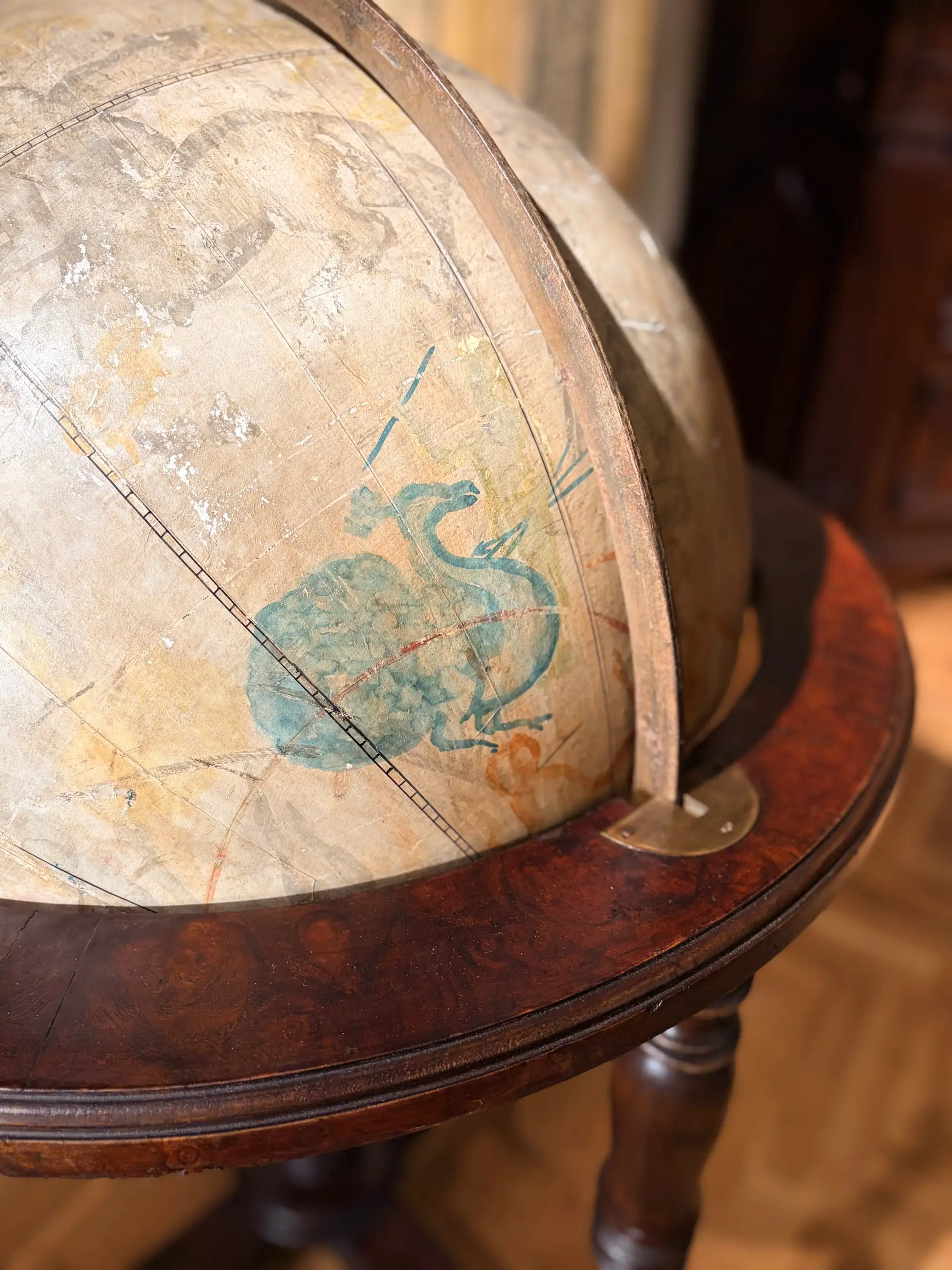
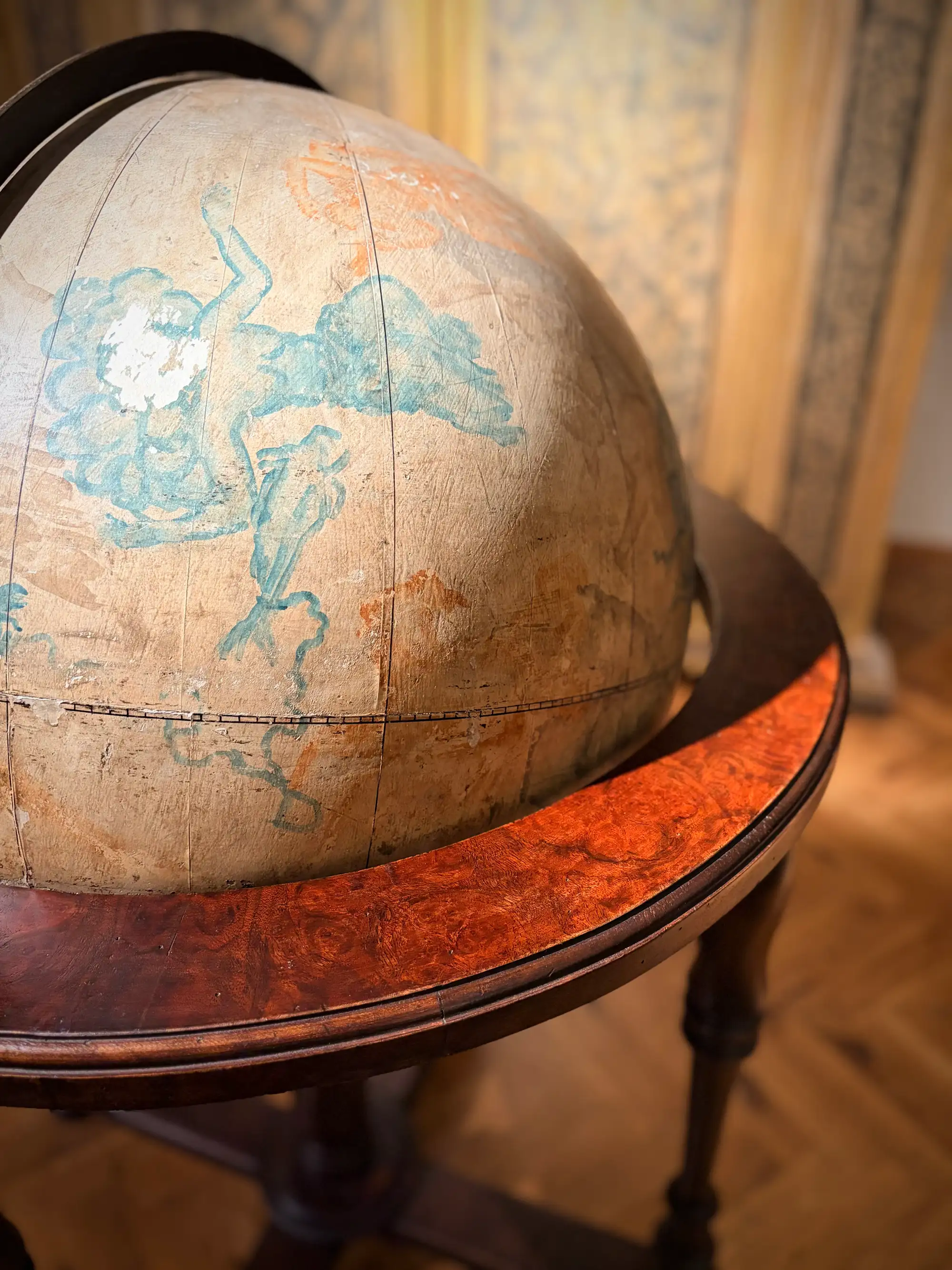
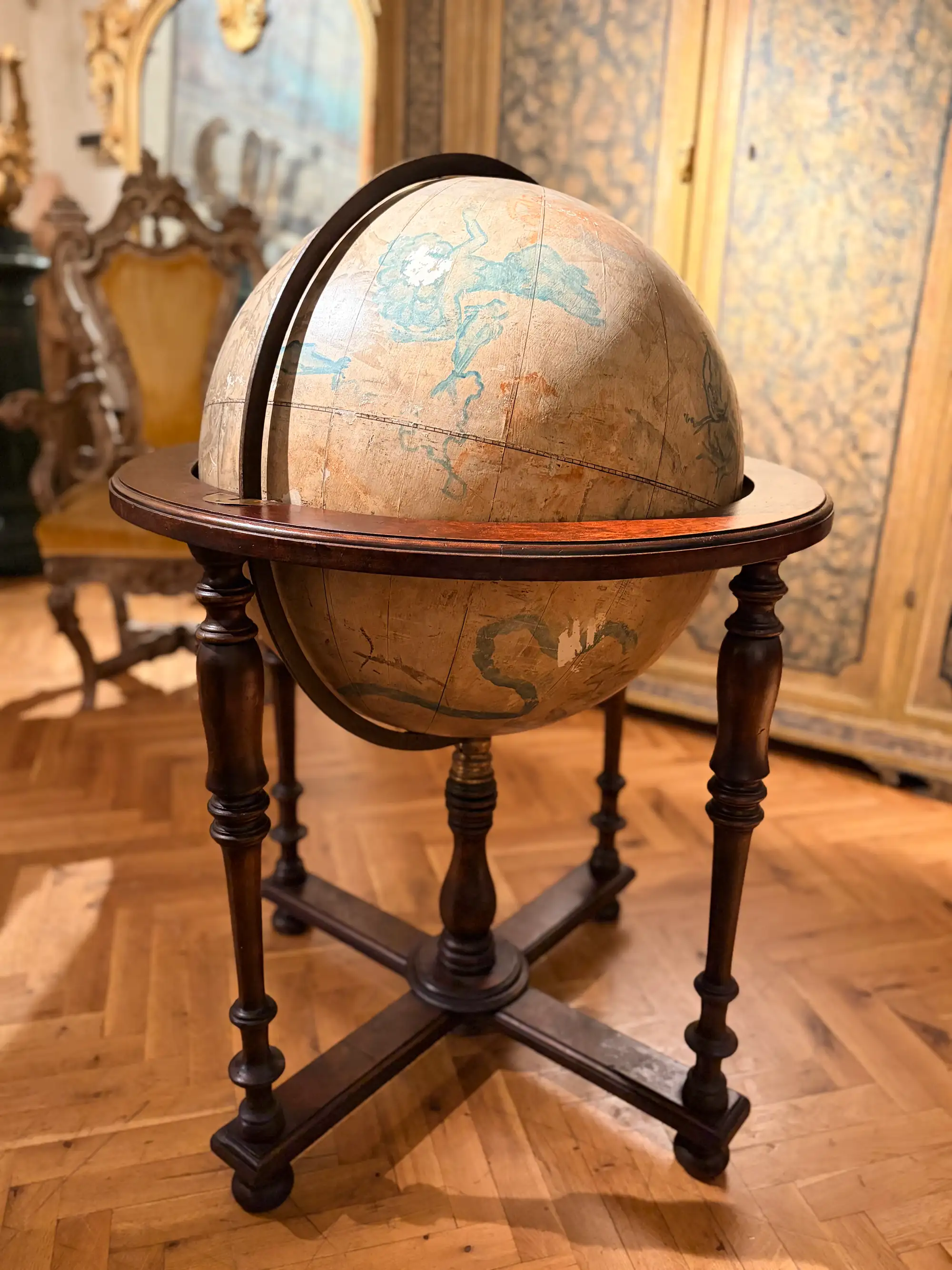
This 19th-century antique Italian celestial globe on a turned wood floor stand is a captivating decorative statement piece, blending early astronomy charm with a rare historical gravitas and a distinct Grand Tour aesthetic.
Dating to the first half of the 1800s, this standing constellation sphere features entirely hand-painted paper gores over a gesso core, supported by a beautifully crafted solid hardwood tripod base. It represents an exceptional acquisition for interior designers and discerning collectors seeking an authentic conversational antique with an understated, historic palazzo character and Wunderkammer appeal.
Aristocratic Provenance & Tuscan Estate Heritage Lineage
This exceptional library globe comes with an immaculate heritage, sourced directly from a historic private villa in Tuscany, Italy. It belongs to a prestigious noble family collection that has remained untouched for generations and is now being unveiled to the open market for the very first time. Its fresh-to-the-market status and pristine country-house provenance make it a highly desirable find for connoisseurs looking for authentic, untouched Italian history.
Astrological Artistry & Symbolism
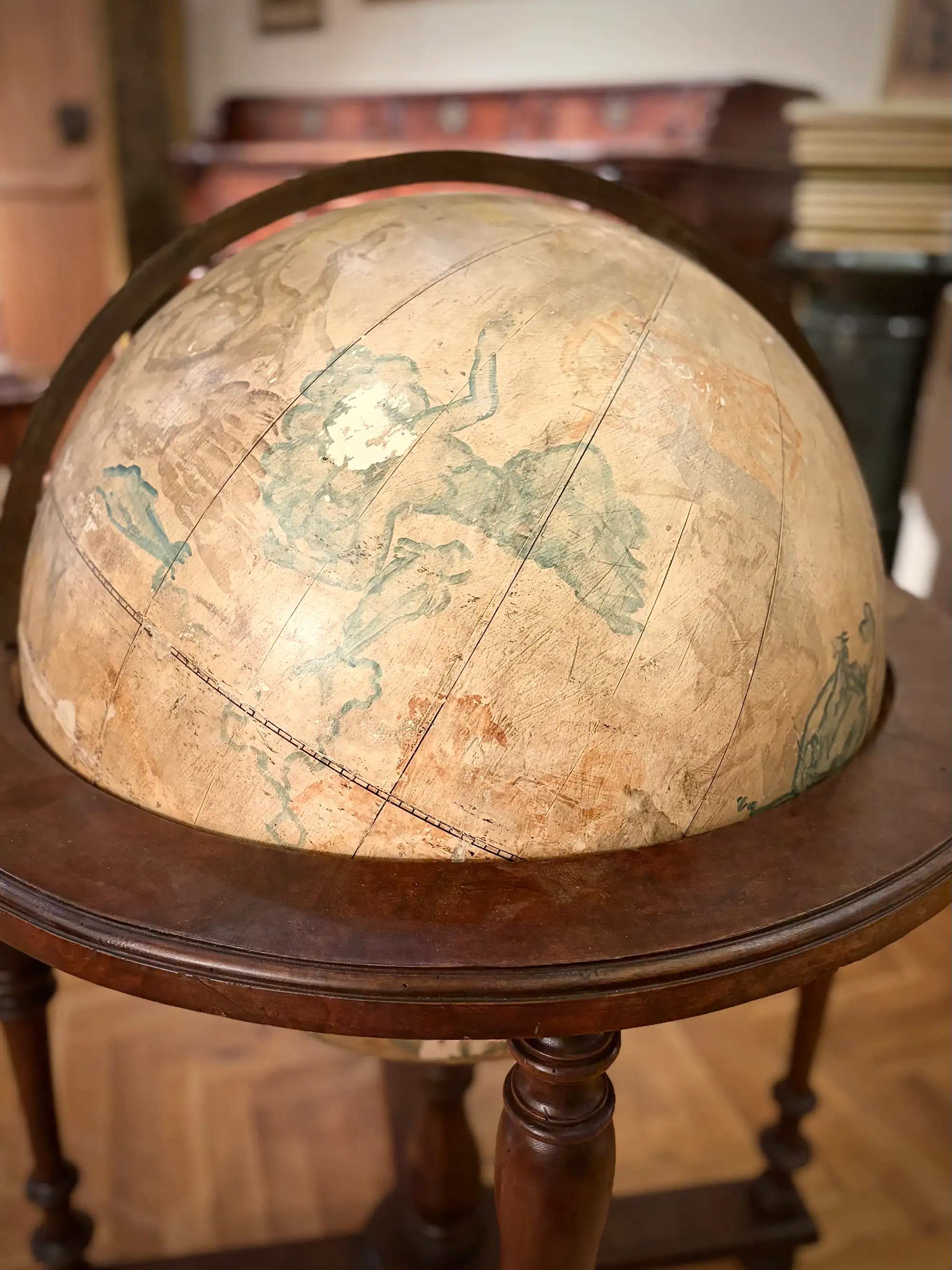
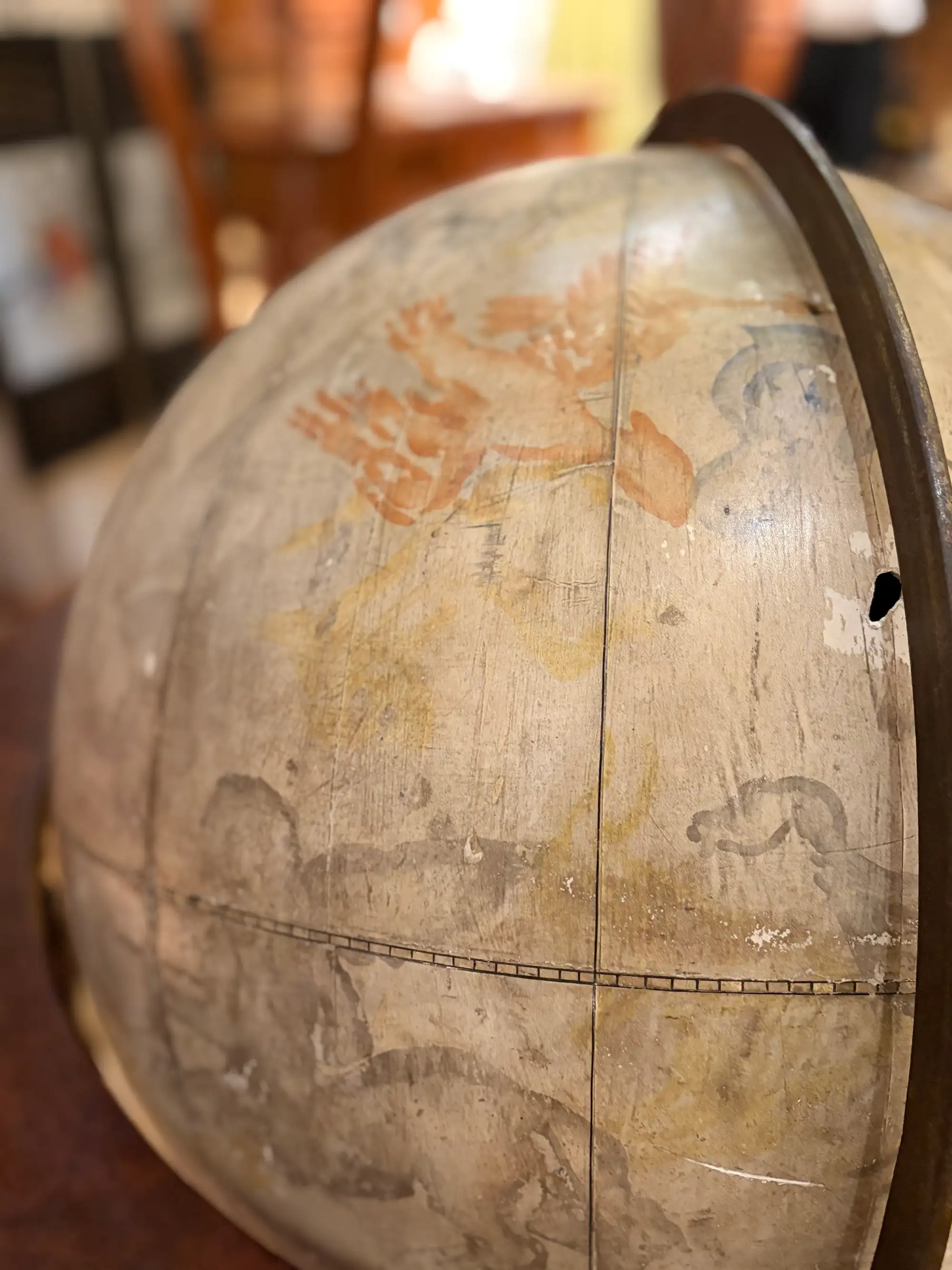
The star globe’s surface features hand-applied paper gores over a finely shaped gesso core, entirely hand-painted with tempera natural pigments illustrating the allegorical figures of the classical zodiac alongside other whimsical constellations. The globe acts as a visual map of the ancient night sky, coded according to ancient astrological planet governors including Leo, Scorpio, and Cancer.
A detail of supreme interest for collectors of early scientific instruments is the deliberate, sophisticated use of historical mineral pigments:
Cancer:Rendered in deep blue tones, symbolizing the Water element and its ruling celestial body, the Moon. Scorpio: Clothed in vivid, intense Mars red, honoring its ancient planetary ruler historically associated with fire and cosmic strength.
The sphere is housed within a fully articulated iron meridian ring, which allows the globe to be adjusted for inclination and smoothly rotated on its own axis, preserving its full original mechanical functionality.
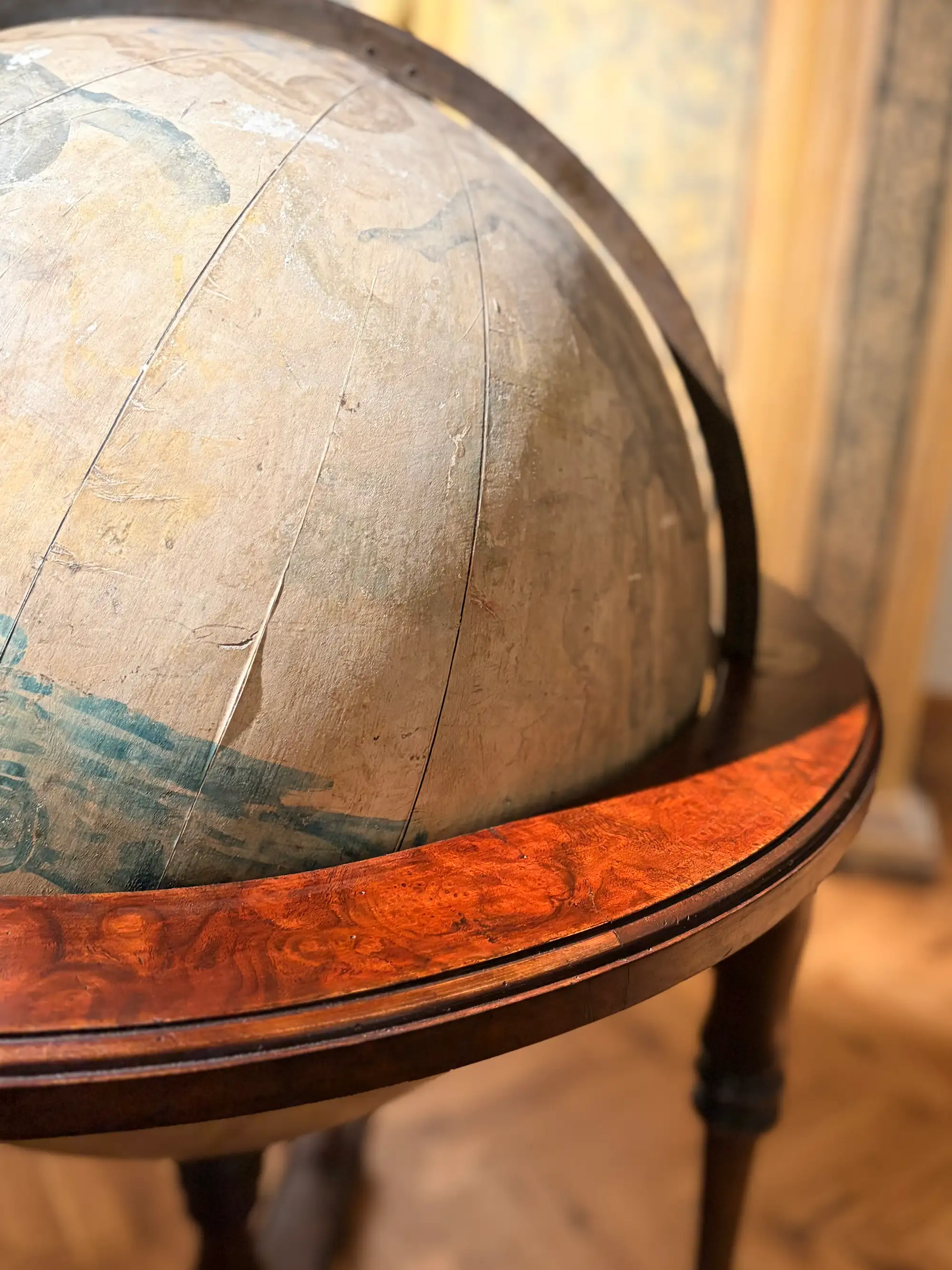
As visible in the photographs, the paper gores display a gorgeous, authentic aged patina with honest signs of time, micro-flaking, and light wear that beautifully underscore its two centuries of history without affecting its structural stability. The sphere rests inside a deep walnut-toned horizon ring, supported by a masterfully turned central pillar and an elegant X-frame stretcher base. This specific format of library globe was highly coveted during the Grand Tour era, serving as both an intellectual tool and a sophisticated emblem of worldly travel for European aristocrats returning from their Italian journeys.
The Divine Perspective: The Mirror-Image Cosmocentric Geometry
What elevates this specific sphere from a mere decorative object to an extraordinary artifact of early cosmological philosophy is the deliberate, sophisticated layout of its cartography. To the modern eye, the positioning of the constellations follows a deeply fascinating, counter-intuitive logic: the Taurus appears to the right of Cancer, while Sagittarius sits to the upper left of Capricorn. Far from being an artistic caprice, this layout strictly adheres to the ancient rules of "cosmocentric" cartography.
Historically, celestial globes were designed to show the universe from a "divine perspective"—looking down at the heavens from the outside, rather than looking up from the Earth. This creates a brilliant mirror-image effect where the traditional East-West orientation of the night sky is flipped. Furthermore, the sweeping, sinuous body of the Hydra (the water serpent) winding its way toward the lower southern pole accurately mirrors the strict coordinate calculations of 17th and 18th-century star catalogues. This hidden layer of mathematical and philosophical history transforms the globe into an exceptional conversational centerpiece, bridging the gap between artistic imagination and the rigid geometry of Renaissance astronomy.
Materials & Craftsmanship
The monumental sphere is supported by a refined, masterfully turned tripod base crafted from solid elm wood. Elm was highly prized in traditional Italian cabinetmaking for its exceptional stability, resistance, and beautifully dramatic grain patterns. Originating from the scientific traditions of ancient Greece and elevated by the 17th-century cartographic workshops of Flanders, this 1800s Italian interpretation perfectly embodies the transition from a navigation tool to a symbol of intellectual curiosity and elite interior styling.
Condition Report & Structural Integrity
Overall State: In excellent, stable antique condition. The solid wood tripod stand is robust, structurally sound, and perfectly balanced.
Surface Patina: The hand-painted paper gores show a gorgeous, authentic age-formed patina and fine network of craquelure, displaying honest wear consistent with its 19th-century origin while remaining completely stable, intact, and well-fixed to the gesso base.
Interior Design & Placement Concepts
Thanks to its imposing silhouette and rich, warm wood tones, this antique floor globe bridges historical depth with high-end interior curation:
Residential Projects: A sophisticated focal point for a stately home library, an executive study, or positioned in a high-ceilinged entryway next to a classic console table to welcome guests with an air of intellectual prestige. It pairs beautifully alongside rich leather seating or a walnut desk, or contrasted with minimalist contemporary furnishings to create an intellectual visual dialogue.
Commercial Spaces: Perfect for adding a sense of heritage, permanent character, and quiet distinction to the lobby of a boutique heritage hotel, a private member's club, a curated design showroom, or an established professional office.
Technical Details
Item Type: Celestial Globe / Floor Globe / Antique Sphere / Library Globe
Style: 19th-Century Italian / Grand Tour / Neoclassical
Country of Origin: Italy (Tuscany)
Date of Manufacture: Circa 1820-1850
Materials: Solid Elm wood (stand), gesso core, hand-applied paper, polychrome tempera paint, natural mineral pigments
Color Palette: Warm Walnut Brown, Aged Parchment, Muted Indigo Blue, Terracotta Red
Dimensions: Total Height: H. 110 cm (43.3") Total Diameter: ~70 cm (27.5")
Richiesta informazioni
Contattaci per qualsiasi informazione, siamo a tua disposizione.
Ti potrebbe anche interessare


Ti potrebbe anche interessare
Related products
-

Italian 20th Century Faux Red Porphyry Lacquered and Gilt Framed Wood Doors
-

Louis XVI Italian White Lacquer and Giltwood Console with Scagliola Siena Marble Top
-
Sold out!

Islamic Style Silvered Metal and Glass Illuminated Display Cabinet with Shelves
-
Sold out!

Italian 19th Century Palatial Hand Carved and Lacquered Doorway Frame
Iscriviti alla Newsletter
Resta sempre aggiornato sugli eventi della gallerie e sul nostro catalogo