



19th-Century Italian Gothic Revival Carrara Marble Relief Architectural Panel


19th-Century Italian Gothic Revival Carrara Marble Relief Architectural Panel
This 19th-century European architectural Carrara marble monumental relief with Angels and Lamb of God (Agnus Dei) was originally an altar front (paliotto), carved as part of a grander sacred installation.
The solid marble slab panel is a monumental mid-1800s sculpture with a Gothic aesthetic, a masterwork carved in deep relief, featuring a central quatrefoil medallion enclosing the mystical Lamb of God flanked by two beautifully draped figures - saints or angels- inside a deep ogival niches holding a cartouche.
The artistic layout is centered around a beautifully executed hand-carved medallion depicting the Agnus Dei, bearing a cross-emblazoned banner with a sacrificial chalice at its feet. This deep Eucharistic imagery draws heavily from late medieval and Northern European traditions.
The sculpture displays deep undercutting that maximizes shadow play, allowing the forms to dramatically emerge from the background panel. The solid marble slab, exuding an extraordinary sense of historical gravitas, boasts immense technical skill, drawing the viewer's attention to the weightless fluidity of the drapery, the virtuoso carving of the fleece's tightly coiled ringlets, and the refined anatomical precision of the figures’ hands and faces and their flowing robes adding movement and depth to the white marble surface.
This frieze slab stands as a premier acquisition for discerning curators and interior architects, seeking an authentic, commanding statement antique presenting a rare combination of sacred devotion and majestic structural character tailored for high-end residential and commercial collections.
Distinguished Connoisseur Provenance
This exceptional marble structure enters the market with a flawless lineage, sourced directly from the private collection of an esteemed European connoisseur and passionate collector. Meticulously selected for its academic importance and formal beauty, represents a secure and elite buying opportunity for international collectors of sacred art and historical decorative sculpture.
Sculptural Technique, Iconography & Academic Attributes
For international collectors, this iconography carries a dual layered fascination:
The Florentine Guild Connection: This haloed sacrificial lamb imagery strongly mirrors the famous heraldic crest of the historic Arte della Lana (the Guild of Wool Manufacturers), one of Florence's most celebrated symbols of Late Renaissance civic pride.
German-Roman Nineteenth-Century Workshops: The strict geometric control of the pointed architectural arches and the crisp, stylized carving of the lamb's fleece indicate a highly specialized 19th-century workshop blending Italian materials with Northern European artistic precision. The treatment is closely linked to the circle of German sculptor Theodor Wilhelm Achtermann—who operated a prolific studio in Rome from 1839 until his death in 1884 specializing in high-profile religious and devotional commissions—as well as the refined marble reliefs of Arnold Hermann Lossow.
The lateral niches shelter two youthful, haloed figures holding open scrolls. Their fluidly carved vestments and subtle, non-rigid shifts in posture allow them to be interpreted with equal scholarly validity as scroll-bearing angels or as the Evangelists.
Interior Design & Architectural Placement
Given its imposing horizontal dimensions and sculptural depth, this antique marble relief easily transitions into upscale contemporary or classical spaces:
Residential Projects: A breathtaking architectural focal point when built into a custom fireplace surround in a grand salon, or mounted as a high-relief feature wall piece in a high-ceilinged dining room or entrance hall.
Commercial Spaces: An exceptional decorative element to anchor a boutique hotel lobby, serve as a unique, historical reception counter fascia for an elite showroom, or add an air of established heritage to a private members' club.
Installation, Practical Mounting & Versatility
Weighing approximately 250 kg (550 lbs), the panel can be recessed flush into a wall niche, mounted securely using architectural anchors, or displayed as a freestanding piece on a bespoke floor plinth. This flexibility ensures a seamless, trouble-free installation tailored to any interior. It serves as an outstanding conversation piece both indoors and outdoors—whether anchoring a great hall or gracing a courtyard garden—utilizing traditional wrought-iron brackets or modern heavy-duty chemical anchors.
Condition Report & Material Quality
Overall State: In excellent, structurally solid antique condition. Carved from a massive, singular block of premium Italian veined Carrara marble.
Surface Patina: Features an authentic, beautifully preserved surface with a smooth finish and gentle natural historical character consistent with its 19th-century creation. The structural integrity is flawless, and the carving details remain remarkably crisp and defined.
Technical Details
Item Type: High Relief Sculpture / Architectural Frieze / Marble Panel
Style: Gothic Revival / Late Renaissance Style
Country of Origin: Europe/ Germany
Date of Manufacture: Circa 1840-1880
Associated Circle: Circle of Theodor Wilhelm Achtermann (1799–1884) / Arnold Hermann Lossow (1805–1874)
Materials: Premium carved solid Italian Carrara marble
Color Palette: Aged White, Classic White Marble, Muted Grey, Mineral Veining
Dimensions: Length: 194 cm (76.38") Height: 70 cm (27.56") Depth: 10 cm (3.94") Weight: Approx. 250 kg (551 lbs)
Richiesta informazioni
Contattaci per qualsiasi informazione, siamo a tua disposizione.
Ti potrebbe anche interessare


Ti potrebbe anche interessare
Related products
-
Sold out!
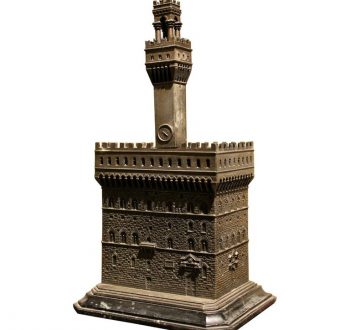
Italian Bronze and Metal Jewelry Box Modeled as Palazzo Vecchio, Florence, 1940s
-
Sold out!

Italian 18th Century Hand Carved Wood Religious Madonna and Child Sculpture
-
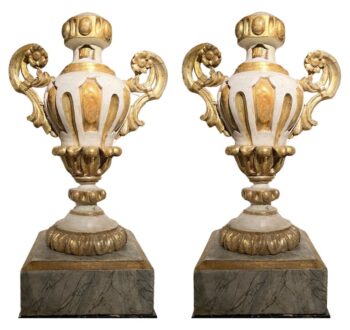
Italian Antiques Louis XIV Urn Lacquer and Gilt Vases
-
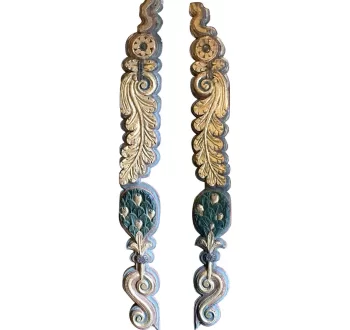
Italian Antique 18th Century Handcarved Polychrome Painted Pilaster Friezes
Iscriviti alla Newsletter
Resta sempre aggiornato sugli eventi della gallerie e sul nostro catalogo